Description
In this learning strategy, we discuss the mnemonic techniques of chunking, combining, using graphics, and making stories for memory enhancement.
Mnemonics. Pronounce it knee MON icks. Mnemonics is the use of anything that helps you remember, named after a Greek word meaning memory and the Greek goddess Mnemosyne. To show you that memorizing can be fun, let’s look at a dramatic example of the power of mnemonics.
Let’s say you want to learn the alphabet–backwards. Here it is. You could just memorize it. That might appear to be a bit daunting, but that’s because you’re probably looking at the entire string and wondering how you can learn the whole thing all at once. But if you apply a couple of learning strategies, you can learn the alphabet backwards in only five minutes.

Method
Mnemonic strategy #1: Chunking. Instead of looking at the backwards alphabet as one huge 26-character string, divide it into chunks that can be handled. It’s like cutting your steak (or tofu) into smaller bites–bite sized chunks. A good example of chunking is way we remember phone numbers in three chunks–area code, prefix, and final four. Area codes are easy because so many phone numbers that we call have one of the handful of same area codes. So, instead of memorizing 18003473012, we learn 1 800 347 3012. For the backwards alphabet, we might chunk it into threes: zyx wvu tsr, etc.
Mnemonic strategy #2: Combining. But chunking twenty-six letters into nine chunks is too many to handle in working memory (which can usually handle five to seven chunks), so we need to combine some of the letters into bigger chunks. In this case, we’ll use four to six letters for a chunk. That will give us zyxw, vuts, etc.
Mnemonic strategy #3: Graphics. One key to memorization is that whenever possible, use graphics to aid your learning. Pictures are processed by the brain quickly and they can serve to attach your short-term memory (which is trying to learn the alphabet backwards) to a schema (or previously existing mental model or idea) in your long-term memory. In simple terms, this means that pictures help you remember.
Mnemonic strategy #4: Stories. Create a story or sentence around what you want to remember and the material will come back to you as you remember the story or sentence. More about stories at the end of this article.
Okay, let’s put all these strategies together and learn the alphabet backwards.
In looking over the backwards letters, we can see a chunk at the end that suggests an image and part of a story. Starting at the back end, FEDCBA has fed in it, so CBA (Sheba or perhaps Ciba the cat?) might get fed. Here’s our picture and our chunk:
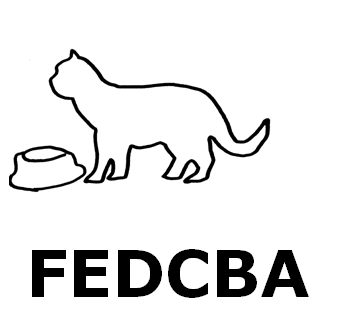
Notice that you have already learned six of the letters of the alphabet backwards in a highly memorable way, in less that half a minute. We’ve chunked and combined six letters out of 26, created a visual hook with the graphic, and made a story. Yes, “Fed Ciba (the cat)” is a story, however brief.
But moving back a bit more, what about MLKJIHG? Doesn’t that remind you of a milk jug? And isn’t that appropriate for our hungry cat? So we add seven more letters in a single chunk (or memory unit), and add the two pieces together:
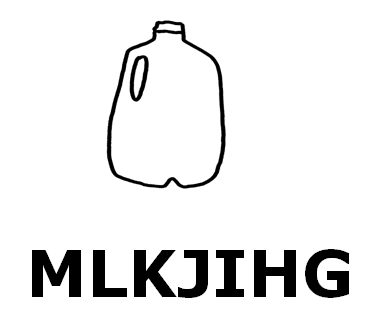
Got it so far? Two chunks, two graphics, and a partial story–a milk jug fed Ciba–reminds us of the last 13 letters of the backward alphabet. That’s half! So we have two powerful memory devices running at the same time: pictures and a story. An illustrated story.
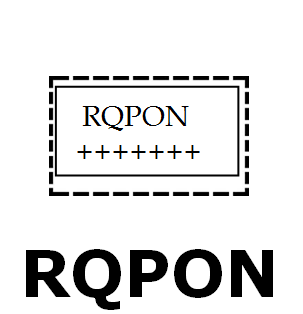
Next we chunk out another short string of letters, RQPON, which sounds like “our coupon” that we might have used to buy the milk jug to feed Ciba. Now we have:
Now we have to get a bit more creative because the remaining letters don’t necessarily suggest any objects. So, we’re going to chunk them into two final elements. First is an exclamation of surprise, ZYXW (pronounced Zooksoo, or if you think it’s better, Zykesoo), represented graphically by an exclamation point. Then a friend with an ununsual name, Vuts (pronounced Voots), which sounds a bit like an electrical short, so we use a lightning bolt to represent it:
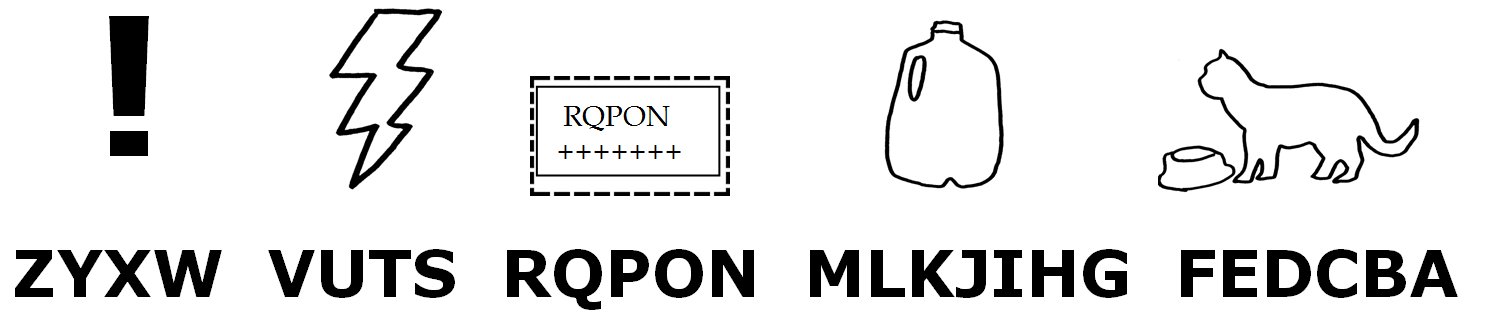
The memory story, then, is, Zooksoo, Voots, our coupon got a milk jug that fed Ciba.
What have we learned (as the teacher always asks before answering the question himself or herself)?
Well, we’ve learned the alphabet backwards in five minutes.
- And we have learned that memorizing is easier if you combine a story with simple graphics. (Research shows that simple graphics are better for learning concepts that complex graphics or even photos, unless there is essential detail in the photos,)
- We have discovered that the way to learn something is to chunk it out instead of tackling it as a whole or in individual parts. Notice that with the backwards alphabet, you are learning five elements of information, not 26 itty bitty ones or one enormous one. Chunking is an important principle when you are going to study for a test, creating learning materials, or just trying to remember some facts.
- We’ve learned what mnemonics is (and now you’ve also learned that mnemonics takes a singular verb. It’s just an odd word).
- I hope we’ve learned that memorizing can actually be fun if you take up the challenge of creating some mnemonic devices.
Create a Story: Another Example
Let’s look at another case. If you ask someone, “Which month follows February?” you’re likely to get a look that implies, “Is this a trick question?” If you get a reply, it will obviously be, “March, of course.” And then you will say, “No, I meant which month follows February in alphabetical order?” Or better, first ask someone to say the months, and then after he or she rattles them off, say, “No, please say them in alphabetical order.” The person might try, but it will be a struggle.
The quick recital and the struggle elegantly demonstrate the difference between fluency in long-term memory (where the calendar order months are stored) and the grinding work of making working memory sort things out in real time. This dynamic difference also shows the importance of learning things in the order or sequence they will need to be used, to make recall much easier at the time of need.
But to return to our example. Alphabetical order for the months is April, August, December, February, January, July, June, March, May, November, October, September. Trying to remember this as a huge acronym, AADFJJJMMNOS, though only half as long as the alphabet, looks too hard. So, once again, we create a story. In this case, no graphics because the memory string is fairly short. The story I created is this: “April’s report card was mixed, but she had three Jajul jewels from Marmayno’s.” This reminds me that April is the first month in alphabetical order. A mixed report card tells me that April got an A, a D, and and F (which reminds me of August, December, and February). Her three jewels are the three J months, January (comes first because it’s also first on the regular calendar) July and June (reverse of calendar order is something I remember), and then the the department store, MarMayno’s is March, May, November, October, and September.
Creating a story out of anything you want to remember is a powerful strategy. We all remember stories much better than facts, philosophical discussions, or a string of details. Stories have linear continuity–they start somewere, go somewhere, and end somewhere, thereby forming an organizing structure that connects one element to another. And they usually have some semblance of a plot–which may or may not include a conflict. But the plot creates interest and interest is the glue of memory.

Password Protection
Here, now, is a very practical application of mnemonics. Did you know that “password” and “123456” are the two most common passwords used? Not very hard to guess, are they? But why do people do that? Simply because every site wants a password (changed regularly!) and who can remember all those complicated ones? Mnemonics to the rescue! If you want a difficult password that you can remember easily but that others won’t be able to guess, just make it a mnemonic. Find a sentence, proverb, Biblical verse, or other saying you like and use the first letters of it for your password. Examples:
- My best friend is Tom from Arizona. Password: MbfiTfA
- When two professors meet you have three opinions. Password: W2pmyh3o
- Ephesians 3:20 is a verse I love: E320iavIl.
- My cat Pete and my dog Fido don’t get along: McPamdFdga.